
After menopause, honestly/Compounds
Your Muscle Noticed Menopause. Science Still Points at Iron.
Midlife muscle loss is real, quiet, and not in your head. Here's what the training research actually backs, and why the internet's favorite growth-hormone peptide stack still hasn't earned a muscle claim.
Inspired Labs Editorial/Nov 5, 2026/10 sources
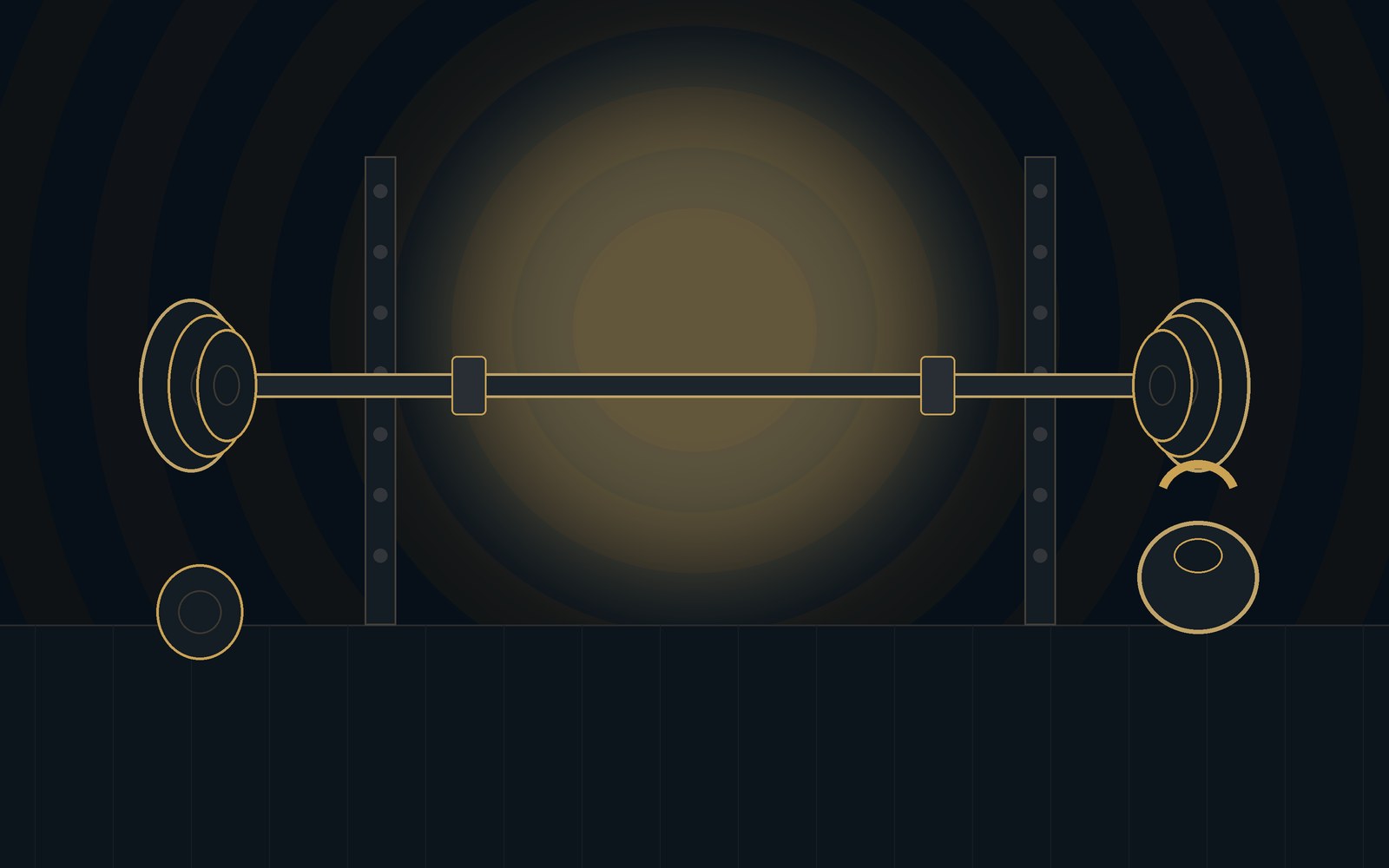
Your Muscle Noticed Menopause. Science Still Points at Iron.
You're 52, the jeans still button, and somehow the grocery bags feel heavier than they did five years ago. You didn't stop moving. Your muscle just got quieter.
You're not imagining the timing.
Did menopause really take some muscle?
It looks that way, with an honest asterisk.
A 2026 review of menopause and muscle found lean mass tended to run a few percent lower in perimenopausal women, and a bit lower still after menopause, compared with women who hadn't started the transition yet.
Most of those studies used a body scan that measures lean tissue, not muscle under a microscope. The authors themselves say the causal link is still thinner than the timing suggests. "Suspect" is still the honest word.
What isn't in doubt: losing strength makes stairs, suitcases, and getting up off the floor harder. That's the part you feel before any scan does.
So what actually helps?
A January 2026 systematic review pooled 34 strength-training studies in postmenopausal women — more than 1,500 people.
The boring headline won. Structured strength training consistently improved strength, body composition, and bone density.
The flashy add-ons mostly didn't. Extra protein, creatine, calcium, vitamin D, and a grab bag of other supplements did not reliably beat training alone in that review. Adequate protein still matters as a floor. Training is the ceiling.
What that looks like in real life:
Lift something twice a week, at least. Major muscle groups. Machines, free weights, bands — the best program is the one you'll keep.
Make it gradually harder. If week twelve feels identical to week one, your muscles stopped getting the memo.
Eat enough protein to support the work. Think food first: eggs, yogurt, fish, beans, chicken. Powders are optional, not magic.
Don't starve the project. Big calorie cuts plus lifting can cost you the muscle you're trying to keep.
Get weird weakness checked. Sudden one-sided weakness, falls, or pain that wakes you up is a clinician visit, not a forum thread.
Your midlife muscle isn't asking for a vial. It's asking for a barbell it can argue with twice a week.
Wait, isn't there a peptide stack for this?
If you've been on the longevity or "women's peptides" side of the internet, you've seen the pair: CJC-1295 and ipamorelin.
The pitch is tidy. One compound leans on the growth-hormone-releasing-hormone path. The other nudges the ghrelin receptor. Together, the lore says, they raise your own growth hormone and somehow rebuild midlife muscle.
Here's what the papers actually measured.
What did the human trials test?
CJC-1295 has two small randomized studies from 2006 in healthy adults. After an injection, growth hormone and a related marker called IGF-1 stayed elevated for days. One follow-up study found the hormone kept its natural pulse pattern while the trough levels rose.
Those trials measured blood hormones. They did not measure squat strength, lean mass, or menopause.
Ipamorelin can raise growth hormone in volunteers. Its biggest published randomized trial wasn't a gym study at all. It tested whether the peptide helped the gut wake up after bowel surgery. It was well tolerated. It did not beat placebo on the main endpoint.
And the combo you see on menus? I searched ClinicalTrials.gov this morning for a trial of CJC-1295 and ipamorelin together. Nothing came back. PubMed reviews in 2026 say the same thing: the stack has never been tested as a stack in people.
Literature, not lore: raising a hormone in a healthy volunteer's blood is not the same as rebuilding muscle after menopause.
Didn't the government just clear these?
No.
In late October, HHS floated a draft enforcement-discretion policy covering six peptides for licensed compounding pharmacies. CJC-1295 and ipamorelin are not on that list.
Separately, FDA safety materials have flagged both compounds on a bulk-substances risk list — for CJC-1295, reports that include a racing heart and flushing; for ipamorelin, serious events in a hospital IV study. That is regulatory context, not a shopping tip.
Our longer CJC / Ipamorelin brief walks through both paths without the menopause costume.
If you remember one thing…
Menopause may well have quietly taken some muscle, and the best-backed answer is still progressive strength work you can stick with. The internet's favorite growth-hormone stack has human hormone data and a gut trial that missed. It does not have a menopause-muscle trial.
Everything Inspired Labs carries is for Research Use Only. It's lab material, not for your body, and nothing here is medical advice.
Sources
- 01Menopause, female sex hormones, skeletal muscle mass and muscle protein turnover in humans — Menzies C, Bowtell R, Shur N, Brook MS (2026). J Cachexia Sarcopenia Muscle.
Narrative review (lean/muscle mass tended lower across the menopause transition: about −2.5% in perimenopausal and −5.7% in postmenopausal women vs premenopausal women in the pooled observational comparisons; authors note the causal link remains incompletely established; most data from DXA lean mass).
- 02Analysis of the additive effects of nutritional strategies in strength training interventions on body composition, muscle strength and bone mineral density in postmenopausal women: a systematic review — Walter F, Schalla J, Bloch W, Diel P, Geisler S, Isenmann E (2026). Sports Med Open.
Systematic review of 34 studies (N = 1,541 postmenopausal women); structured strength training consistently improved body composition, strength, and BMD; protein and other supplements did not show reliable additive effects beyond a protein floor around 0.8 g/kg body weight.
- 03Being Active as We Get Older (public flyer) — American College of Sports Medicine / Exercise is Medicine (2026). American College of Sports Medicine / Exercise is Medicine (Accessed Nov 5, 2026).
Public guidance (older adults: muscle-strengthening activity at least 2 days per week, major muscle groups).
- 04Prolonged stimulation of growth hormone (GH) and insulin-like growth factor I secretion by CJC-1295, a long-acting analog of GH-releasing hormone, in healthy adults — Teichman SL, Neale A, Lawrence B, Gagnon C, Castaigne JP, Frohman LA (2006). J Clin Endocrinol Metab.
Two randomized, placebo-controlled ascending-dose trials in healthy adults ages 21–61; single injection raised mean GH ~2- to 10-fold for ≥6 days and mean IGF-I ~1.5- to 3-fold for 9–11 days; no serious adverse reactions reported in those trials. Hormone endpoints only.
- 05Pulsatile secretion of growth hormone (GH) persists during continuous stimulation by CJC-1295, a long-acting GH-releasing hormone analog — Ionescu M, Frohman LA (2006). J Clin Endocrinol Metab.
Overnight sampling in healthy men before and 1 week after one CJC-1295 injection; pulse frequency/amplitude preserved; trough GH rose markedly; mean GH and IGF-I rose. Hormone endpoints only.
- 06Pharmacokinetic-pharmacodynamic modeling of ipamorelin, a growth hormone releasing peptide, in human volunteers — Gobburu JV, Agersø H, Jusko WJ, Ynddal L (1999). Pharm Res.
Dose-escalation PK/PD in healthy male volunteers; ipamorelin produced a single GH-release episode peaking around 40 minutes.
- 07Prospective, randomized, controlled, proof-of-concept study of the Ghrelin mimetic ipamorelin for the management of postoperative ileus in bowel resection patients — Beck DE, Sweeney WB, McCarter MD; Ipamorelin 201 Study Group (2014). Int J Colorectal Dis.
Phase 2 multicenter RCT (NCT00672074); 114 in the modified intent-to-treat set; median time to first tolerated meal 25.3 h (ipamorelin) vs 32.6 h (placebo), p = 0.15; no significant difference on key efficacy endpoint.
- 08ClinicalTrials.gov API search, query "CJC-1295 AND ipamorelin", run Nov 5, 2026 — zero studies returned (2026). ClinicalTrials.gov.
- 09Enforcement Discretion Policy Regarding 503A Compounding Using Certain Peptide Bulk Drug Substances; Availability — US Department of Health and Human Services (2026). Federal Register.
Draft, interim, non-binding; covered peptides summarized across contemporaneous legal analyses as BPC-157, epitalon, KPV, MOTS-c, semax, and TB-500 (CJC-1295 and ipamorelin not among them); "Compounded drugs are not FDA-approved."
- 10Certain bulk drug substances for use in compounding that may present significant safety risks (Category 2 materials / PCAC briefing context for selected peptides) — FDA (2026). See also FDA presentation attachment summarizing CJC-1295 Phase 1 hormone data and safety discussion:.
Regulatory context (CJC-1295 and ipamorelin acetate have been discussed in FDA compounding safety materials; not an approval and not a use instruction).
Educational material for laboratory research context only. Nothing here is medical advice, a protocol for human use, or a claim that Inspired Labs products diagnose, treat, cure, or prevent disease.
Continue

Your Tendons Are Still Running on Your Teenage Collagen
Recovery, honestly
Your Tendons Are Still Running on Your Teenage Collagen
Read brief → 3 min
The Holiday Pound Is Small. It Just Never Leaves.
Weight, honestly
The Holiday Pound Is Small. It Just Never Leaves.
Read brief → 3 min
Semax Just Got a Hall Pass. Your Brain Still Wants a Walk.
Longevity, honestly
Semax Just Got a Hall Pass. Your Brain Still Wants a Walk.
Read brief → 3 min