
Compound/Compounds
PT-141 and the melanocortin system: A different kind of peptide story
Bremelanotide won FDA approval in 2019 for acquired, generalized HSDD in premenopausal women. Two Phase 3 trials in 1,247 women moved desire and distress scores. A research vial of PT-141 sits in the same receptor conversation — as a chemical, not as that autoinjector.
Inspired Labs Editorial/Sep 6, 2026/3 sources

PT-141 and the melanocortin system: A different kind of peptide story
PT-141 started as a sunless-tanning accident. Palatin was developing a melanocortin peptide for pigmentation; people in the trials reported desire instead. The analog — bremelanotide — was aimed at melanocortin-4 receptors in the brain rather than the skin. On June 21, 2019, FDA approved it as Vyleesi for acquired, generalized hypoactive sexual desire disorder in premenopausal women. That is a labeled, on-demand subcutaneous drug — and a vivid reminder that receptor biology can travel in unexpected directions.
What the RECONNECT trials found
Two identical 24-week, randomized, double-blind, placebo-controlled trials enrolled 1,247 premenopausal women. Bremelanotide 1.75 mg was taken as needed, at least 45 minutes before anticipated sexual activity. Desire scores on the FSFI desire domain rose; distress on FSDS-DAO question 13 fell; both changes beat placebo. About 25% of treated patients had a desire-score jump of 1.2 or more, versus about 17% on placebo. Nausea hit about 40%. Flushing, injection-site reactions, and headache followed. The label tells patients to stop after eight weeks if nothing moves, and not to stack doses. Modest effect size. Real adverse events. A real autoinjector.
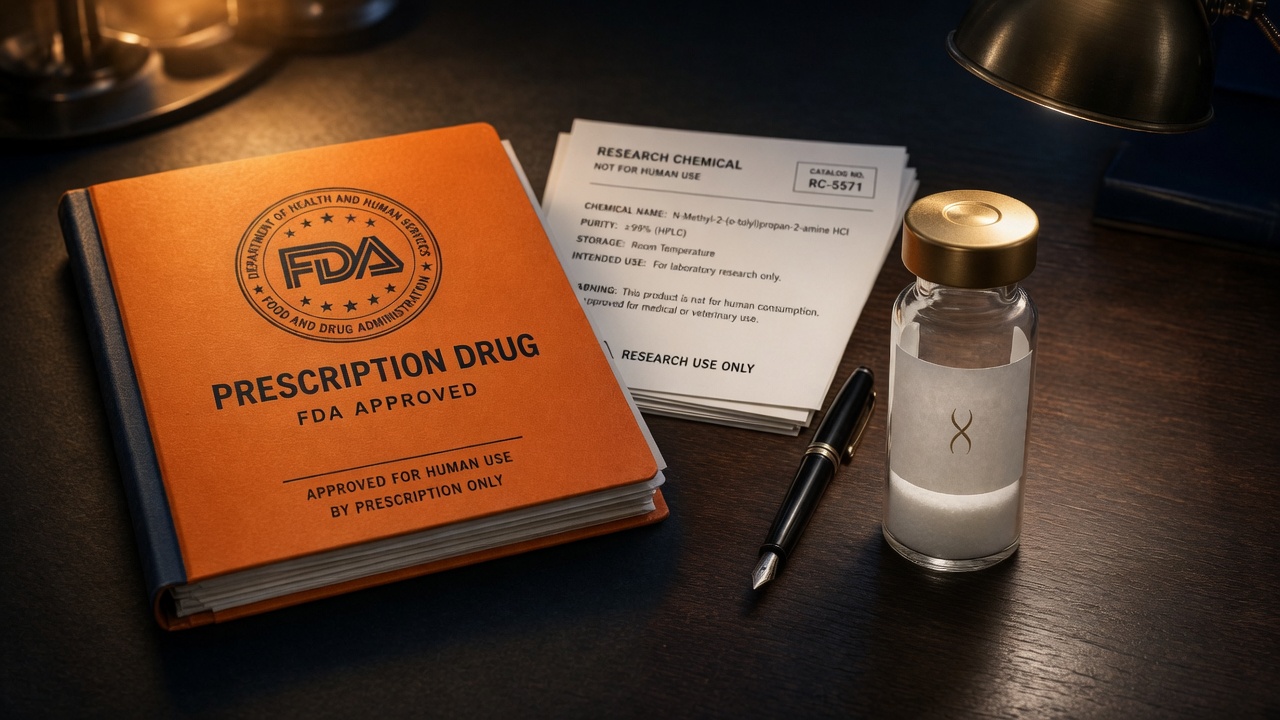
Melanocortin-4 is a receptor. Vyleesi is a product. PT-141 in a research vial is a chemical with a research nickname.
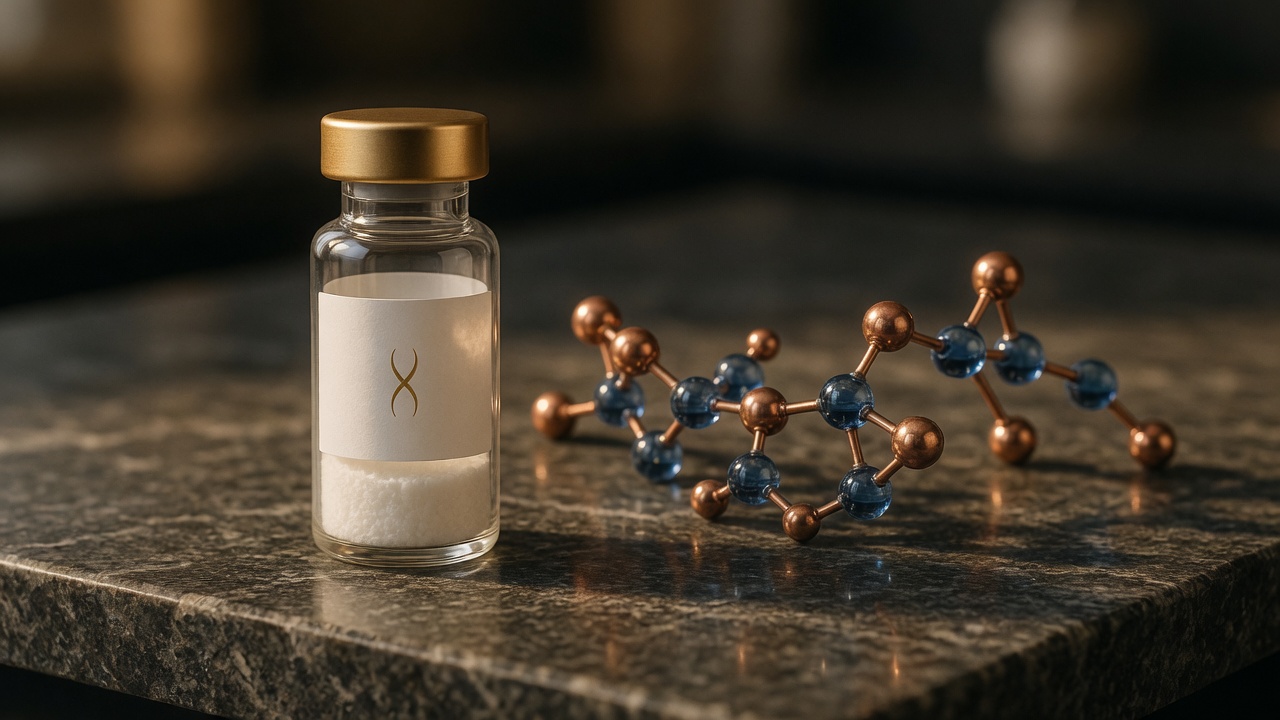
A lyophilized PT-141 lot is a different object from Vyleesi. It is not indicated for HSDD, and it has not been through RECONNECT. Inspired Labs lists it as a melanocortin research chemical because the receptor biology is real and the approved-drug story is easy to borrow casually. This journal will name the receptor, the trials, and the product — and keep the cake in the vial distinct from the autoinjector. If you are comparing lots, open PT-141 in the live catalog and keep the indication attached to the label it actually lives on.
Sources
- 01FDA approves Vyleesi (bremelanotide) for hypoactive sexual desire disorder in premenopausal women (2019). U.S. Food and Drug Administration.
June 21, 2019. On-demand subcutaneous autoinjector. Not more than one dose in 24 hours or eight per month.
- 02Bremelanotide for the treatment of hypoactive sexual desire disorder: two randomized Phase 3 trials — Kingsberg SA, Clayton AH, Portman D, et al. (2019). Obstetrics & Gynecology.
PMID 31599840. RECONNECT: 1.75 mg as needed. Statistically significant increases in FSFI desire and decreases in distress vs placebo. Nausea, flushing, headache common.
- 03Vyleesi (bremelanotide) prescribing information (2021). U.S. FDA / DailyMed.
Indication, device, blood-pressure warning, and the exact population studied. That product frame does not travel with a lyophilized research lot.
Educational material for laboratory research context only. Nothing here is medical advice, a protocol for human use, or a claim that Inspired Labs products diagnose, treat, cure, or prevent disease.
Previous
TB-500 and Thymosin β4: Why the difference matters
Next
Semax and Selank: Two peptides with an unusual history in Russian neuroscience
Continue
What a peptide actually is
Methods
What a peptide actually is
Read brief → 7 min
How GLP-1 changed metabolic research
Compound
How GLP-1 changed metabolic research
Read brief → 9 min

CJC-1295 + Ipamorelin: Two different paths to the growth-hormone axis
Compound
CJC-1295 + Ipamorelin: Two different paths to the growth-hormone axis
Read brief → 9 min