
Compound/Compounds
TB-500 and Thymosin β4: Why the difference matters
Thymosin β4 is a 43-residue actin-binding protein with a real rodent wound literature. Catalog “TB-500” is usually a shorter actin-binding motif. Length changes what experiment you are actually reading.
Inspired Labs Editorial/Sep 7, 2026/3 sources
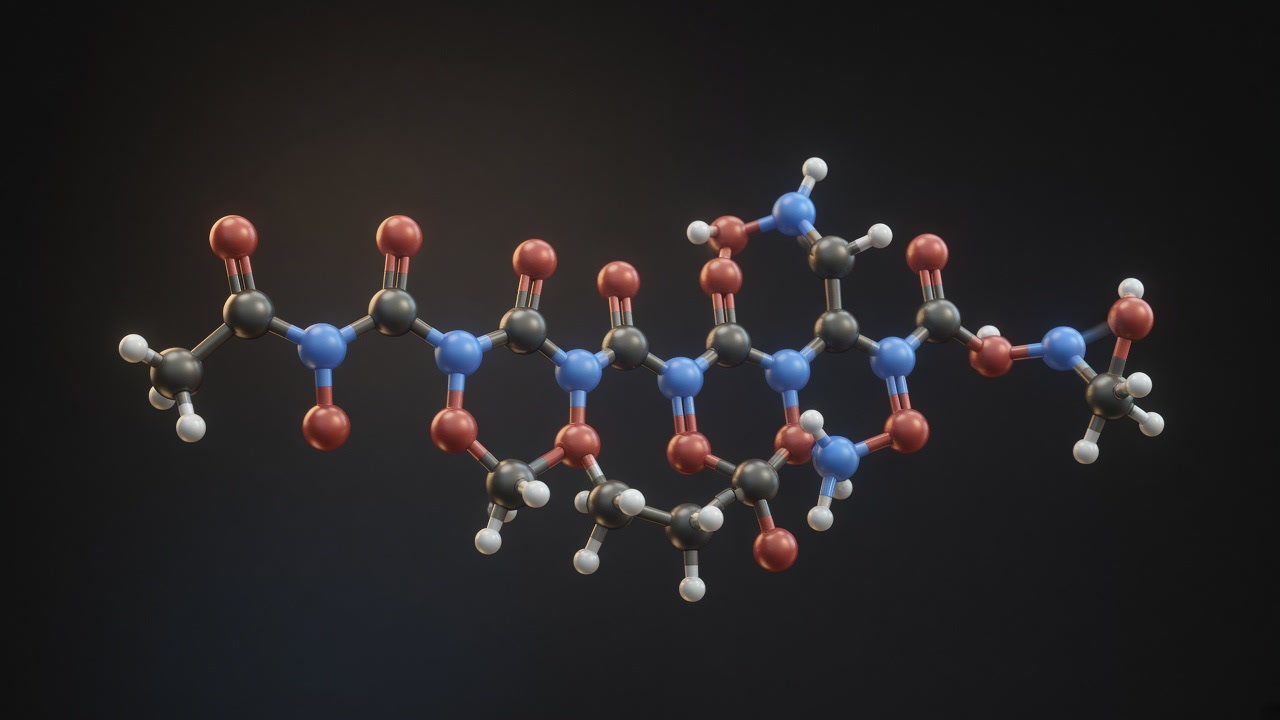
TB-500 and Thymosin β4: Why the difference matters
Recovery forums often treat TB-500 as if it were the whole thymic protein. The lengths tell a clearer story. Thymosin β4 is 43 amino acids. It sequesters G-actin so a cell can move. In 1999, Malinda, Goldstein, and Kleinman put full-length Tβ4 on rat full-thickness wounds and watched re-epithelialization jump 42% by day 4 and as much as 61% by day 7, with more collagen and more new vessels. That paper is why the molecule has a reputation. It is also a rat dermis study — interesting, specific, and still preclinical.
The shorter motif many catalogs sell
In 2003, Philp and colleagues showed that the actin-binding motif — LKKTETQ — could promote dermal repair in aged mice at a level comparable to the parent. That is the pharmacophore story. “TB-500” in research-chemical catalogs is typically an N-acetylated version of that heptapeptide, sometimes described as a Tβ4 fragment. A 2026 scoping review of 80 studies found the evidence base still weighted toward mixed and in-vitro designs, and most of those studies evaluated Tβ4, not TB-500. Direct TB-500 papers were scarce. The conversation online often ran ahead of the table of contents.
When the paper used 43 residues and the vial holds seven, you are looking at related chemistry — and a different experiment.
FDA materials have listed the LKKTETQ fragment among bulk substances that may present significant safety risks in compounding, citing limited human exposure. An agenda or a Category-2-era flag is not a ban on laboratory work. It is a reminder that a rodent wound is not a human safety database. Inspired Labs sells TB-500 as a research chemical for actin- and migration-adjacent models. The catalog lot is the fragment. The famous photographs in the literature are mostly the protein.
Sources
- 01Thymosin β4 accelerates wound healing — Malinda KM, Sidhu GS, Mani H, et al. (1999). Journal of Investigative Dermatology.
PMID 10469339. Full-length Tβ4, topical or intraperitoneal, increased re-epithelialization up to 61% at day 7 in a rat full-thickness wound model, with more collagen and angiogenesis.
- 02Thymosin β4 and a synthetic peptide containing its actin-binding domain promote dermal wound repair in db/db diabetic mice and in aged mice — Philp D, Badamchian M, Scheremeta B, et al. (2003). Wound Repair and Regeneration.
The seven-residue actin-binding motif LKKTETQ promoted repair in aged mice comparable to the parent molecule.
- 03Thymosin beta-4 and TB-500 in tissue healing: a scoping review — Various. (2026). Applied Sciences.
80 included studies, heavily weighted to Tβ4 rather than TB-500. Direct TB-500 evidence is thin; FDA has flagged the LKKTETQ fragment among compounding bulk substances with limited human safety data.
Educational material for laboratory research context only. Nothing here is medical advice, a protocol for human use, or a claim that Inspired Labs products diagnose, treat, cure, or prevent disease.
Previous
CJC-1295 + Ipamorelin: Two different paths to the growth-hormone axis
Next
PT-141 and the melanocortin system: A different kind of peptide story
Continue
What a peptide actually is
Methods
What a peptide actually is
Read brief → 7 min
How GLP-1 changed metabolic research
Compound
How GLP-1 changed metabolic research
Read brief → 9 min

CJC-1295 + Ipamorelin: Two different paths to the growth-hormone axis
Compound
CJC-1295 + Ipamorelin: Two different paths to the growth-hormone axis
Read brief → 9 min