
Bone check/Compounds
The Best-Proven Peptides After Menopause Are Bone Drugs
The peptide forums talk about glow and longevity. The peptides with the biggest trials behind them for women after menopause are prescription bone drugs, and the best habit is a barbell.
Inspired Labs Editorial/Oct 21, 2026/6 sources
The Best-Proven Peptides After Menopause Are Bone Drugs
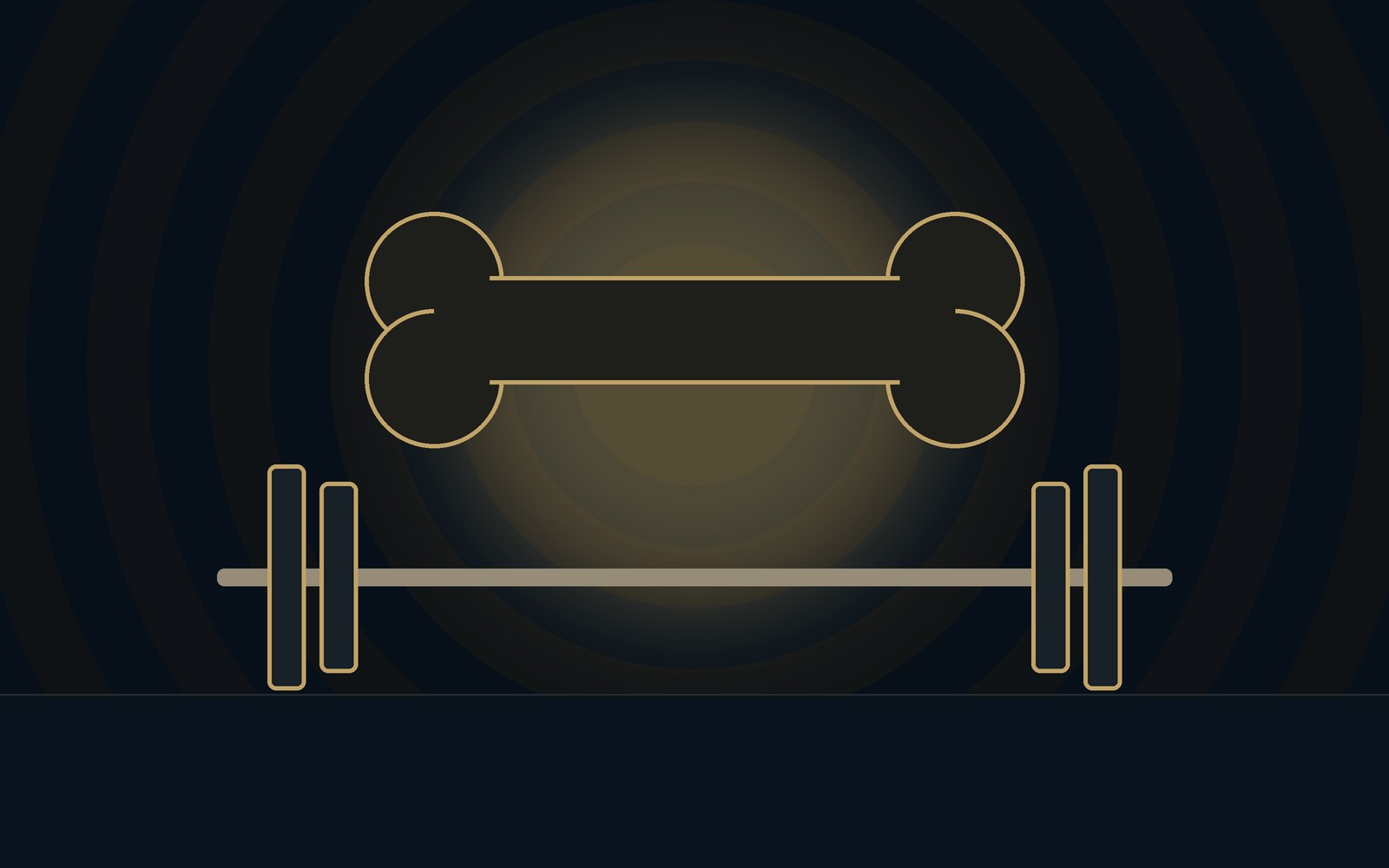
Picture a room full of women in their mid-60s, all with thinning bones, deadlifting heavy barbells and jumping off boxes. Doctors used to call that a bad idea. A trial in Australia called it a good one.
October 20 was World Osteoporosis Day. So let's talk about the habit with the best bone receipts, and the peptides that actually earned theirs.
What actually builds bone after menopause?
Think of your skeleton as a house that's always under renovation. One crew tears out old bone, another crew builds new. After menopause, the demolition crew starts winning.
In the LIFTMOR trial, researchers in Queensland randomly split 101 women, average age 65, all with low bone mass. Half did 30-minute supervised sessions of heavy lifting and jumping, twice a week, for eight months. The other half did a gentle home program.
The lifters' spine bone density went up by about 3%. The gentle group's went down by about 1%. The lifters also got stronger and steadier on their feet.
The catch? Every session was supervised by trained staff, and the women were screened first. That's not a "grab the heaviest bar at the gym" study. If your bones are thin, you'll want a pro in the room.
A few other habits the International Osteoporosis Foundation backs this year:
Keep moving, with some weight on it. Muscle-strengthening and weight-bearing exercise both count.
Eat enough protein and calcium. Your builders need materials.
Skip smoking and go easy on alcohol.
Make falls less likely. Balance work, decent lighting and fewer loose rugs. A fracture usually starts with a fall.
Bone doesn't care about your gym selfie. It cares that you lifted something heavy and landed on your feet.
Wait, there are bone peptides?
There are, and they've been around longer than most of the peptides people argue about online.
Your body makes parathyroid hormone, a protein chain that, among other jobs, can wake up the bone-building crew. In the 1990s, drugmakers tested just the first 34 amino acids of it. That fragment is a peptide called teriparatide.
In a trial published in 2001, 1,637 postmenopausal women who'd already broken a bone in their spine got teriparatide or a placebo. New spine fractures showed up in roughly 14 in 100 women on placebo versus about 5 in 100 on the drug.
The FDA approved it in November 2002 as Forteo. A cousin peptide, abaloparatide, tested in about 2,500 women, was approved in April 2017 as Tymlos.
The peptides with the biggest trials behind them for women after menopause aren't on the forums. They're in the bone clinic.
So why doesn't anyone hype them?
Because they're boring in the best way: prescription drugs for women at high fracture risk, with doctors watching blood tests and timelines. No mystery, no "stack."
That's what finished science looks like. Big randomized trials, a regulator's sign-off, a label with limits. A research vial with a similar-sounding name has none of that paperwork attached.
Literature, not lore.
What about weight-loss shots and bone?
Here's the newer worry. When you lose weight, you can lose some bone along with it.
A Danish trial put adults with obesity on a diet, then randomized them to exercise, liraglutide (an older GLP-1 drug, an earlier cousin of semaglutide), both, or a placebo for a year. Liraglutide alone lost more hip and spine bone than exercise alone, even though weight loss was similar.
The group doing both lost the most weight and kept their bone about steady compared with placebo. In renovation terms, exercise kept the builders on the job.
Honest limits: the average participant was about 43, not postmenopausal. It was a secondary analysis. And liraglutide isn't the newer drugs everyone's talking about now. It's a hint, not a verdict.
If you remember one thing…
After menopause, lifting is the bone habit with a real trial behind it. The best-proven bone peptides are prescription drugs, prescribed and watched by doctors.
Everything Inspired Labs carries is for Research Use Only. It's lab material, not for your body, and nothing here is medical advice.
Sources
- 01World Osteoporosis Day 2026 ("Build, Protect, Strengthen Your Bones for Life") — International Osteoporosis Foundation (2026). International Osteoporosis Foundation (Oct 20, 2026).
Campaign statement (habits listed: eat well, stay active, maintain a healthy weight, avoid smoking and excessive alcohol, prevent falls; the campaign page adds calcium and protein, weight-bearing and muscle-strengthening exercise).
- 02High-intensity resistance and impact training improves bone mineral density and physical function in postmenopausal women with osteopenia and osteoporosis: the LIFTMOR randomized controlled trial — Watson SL, Weeks BK, Weis LJ, et al (2018). J Bone Miner Res.
Human-rct (101 women, aged 65 ± 5; 8 months of twice-weekly 30-minute supervised high-intensity resistance and impact training vs home-based low-intensity program; lumbar spine BMD +2.9% vs −1.2%; superior on all functional measures; one minor adverse event; "under highly supervised conditions").
- 03Effect of parathyroid hormone (1-34) on fractures and bone mineral density in postmenopausal women with osteoporosis — Neer RM, Arnaud CD, Zanchetta JR, et al (2001). N Engl J Med.
Human-rct (1,637 postmenopausal women with prior vertebral fractures; new vertebral fractures 14% placebo vs 5% and 4% in the two PTH(1-34) groups; median 21 months).
- 04Effect of abaloparatide vs placebo on new vertebral fractures in postmenopausal women with osteoporosis: a randomized clinical trial (ACTIVE) — Miller PD, Hattersley G, Riis BJ, et al (2016). JAMA.
Human-rct (2,463 women, mean age 69; abaloparatide reduced new vertebral and nonvertebral fractures vs placebo over 18 months; sponsor Radius Health).
- 05Forteo (teriparatide), NDA 021318, original approval Nov 26, 2002; Tymlos (abaloparatide), NDA 208743, original approval Apr 28, 2017 — U.S. FDA, Drugs@FDA (2002). U.S. FDA, Drugs@FDA.
Approved-drug / regulatory (dates confirmed via openFDA drugsfda API, Oct 21, 2026).
- 06Bone health after exercise alone, GLP-1 receptor agonist treatment, or combination treatment: a secondary analysis of a randomized clinical trial — Jensen SBK, Sørensen V, Sandsdal RM, et al (2024). JAMA Netw Open.
Human-rct, secondary analysis (195 adults aged 18–65 with obesity, mean age 43, 64% female; after an 8-week low-calorie diet, 52 weeks of exercise, liraglutide, combination or placebo; liraglutide alone reduced hip and spine BMD vs exercise alone despite similar weight loss; combination BMD unchanged vs placebo; several authors report Novo Nordisk ties outside the submitted work).
Educational material for laboratory research context only. Nothing here is medical advice, a protocol for human use, or a claim that Inspired Labs products diagnose, treat, cure, or prevent disease.
Previous
Food Noise Has a Second Volume Knob. It's Called Amylin.
Next
Trevogrumab Isn't a Muscle Peptide. It's an Antibody in a Trial.
Continue
Your Muscle Noticed Menopause. Science Still Points at Iron.
After menopause, honestly
Your Muscle Noticed Menopause. Science Still Points at Iron.
Read brief → 3 min

Your Tendons Are Still Running on Your Teenage Collagen
Recovery, honestly
Your Tendons Are Still Running on Your Teenage Collagen
Read brief → 3 min
The Holiday Pound Is Small. It Just Never Leaves.
Weight, honestly
The Holiday Pound Is Small. It Just Never Leaves.
Read brief → 3 min