
Weight, after the shot/Compounds
Your GLP-1 Has an Off Switch. Your Workout Doesn't.
The weight-loss peptides work while they're on board. When people stop, most of the weight drifts back. One habit had better staying power than the drug did.
Inspired Labs Editorial/Oct 27, 2026/7 sources
Your GLP-1 Has an Off Switch. Your Workout Doesn't.
Your friend just finished a year on a weight-loss shot. New jeans, new energy, new habit of saying "I'm just not that hungry." Then the insurance letter arrives.
So what happens next? Science has a fairly clear answer now. It's not a scary one, but it is a little humbling.
Why does stopping matter at all?
Semaglutide and tirzepatide are peptides: short chains of amino acids that copy gut hormones and turn down appetite. They work while they're in your system.
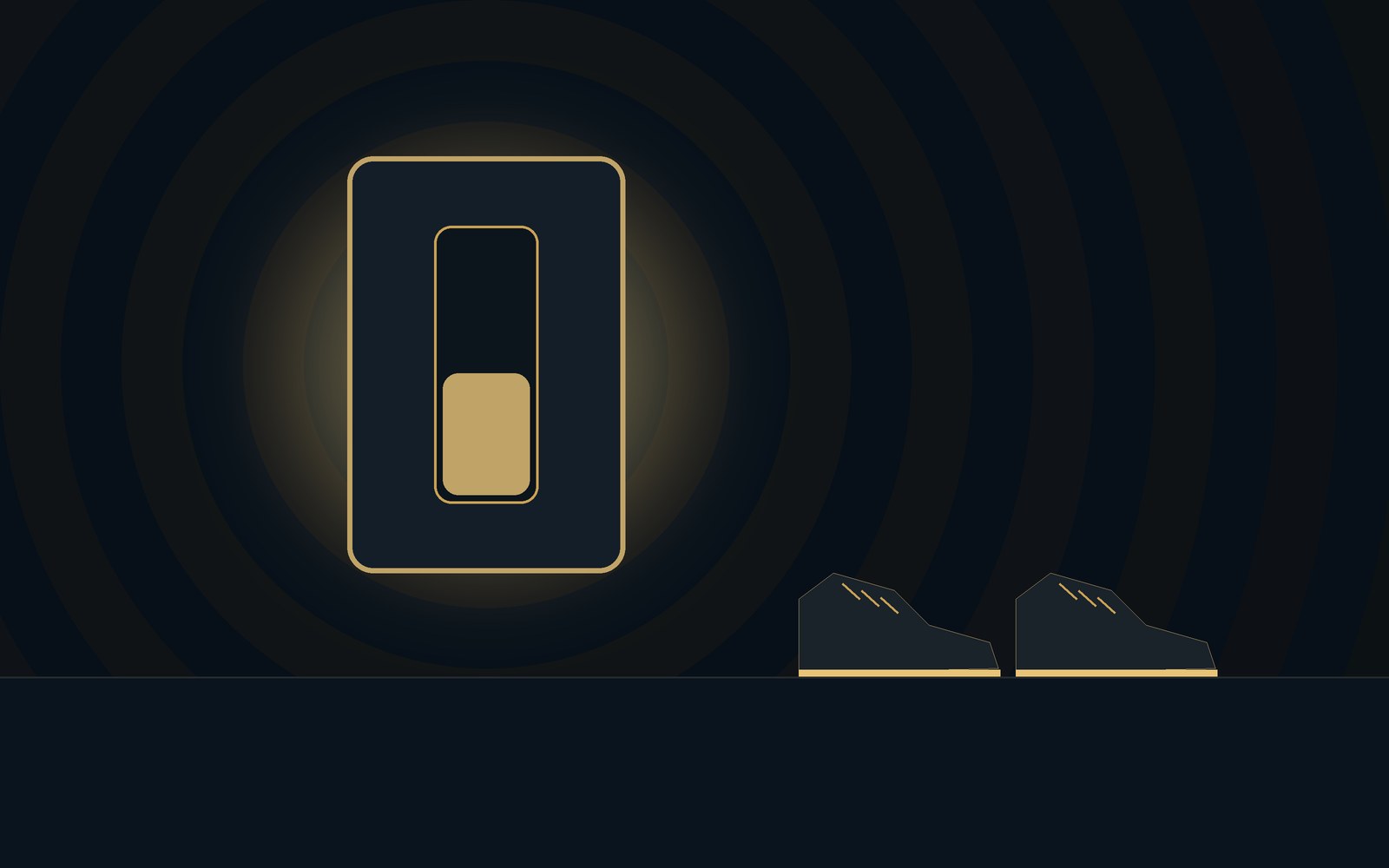
Think of them as a hand holding a dimmer switch low. Take the hand away and the lights slowly come back up. Your appetite didn't forget its old setting. It was just being held down.
So does the weight really come back?
Mostly, yes. Two big trials tested it the hard way: people lost weight on the drug, then some were switched to a dummy shot.
In the semaglutide trial, people regained about two-thirds of what they'd lost within a year of stopping. In the tirzepatide trial, people who'd lost about a fifth of their weight regained a big chunk once they switched to placebo. Those who stayed on kept losing.
Your body isn't being dramatic. It's being consistent.
Is that just two drug-company trials?
Fair question, since the drug makers ran both. So in January 2026, an Oxford team pooled 37 studies covering more than 9,000 people.
They found weight came back at roughly a pound a month after people stopped. Blood pressure, cholesterol and blood sugar gains were on track to fade within about a year and a half.
The twist: regain was faster after drugs than after diet-and-lifestyle programs, even when people had lost similar amounts.
The drug holds the dimmer down. Habits are what you build while the lights are low.
What actually helped people hold on?
This is the good-news section. Short, but good.
Exercise had the best evidence by far. In a Copenhagen trial, people lost weight on a strict diet, then spent a year on supervised exercise, a GLP-1 drug, both, or neither. A year after all of it ended, the exercise groups had held on to their losses. The drug-only group drifted back, about 13 pounds more than the exercise group.
Structure seems to help early on. A tiny pilot published this month followed 39 people as they came off a GLP-1. Those given a wellness app or delivered healthy meals gained far less over four months than those on usual care. But it was only four months, and everyone still gained some.
Plan the exit with whoever prescribes. Every recent review says the same thing in different words: stopping goes better as a plan than as a surprise.
If you've seen "just eat clean and you'll keep it off" posts, here's the thing. Nobody has run a good trial of a specific diet after stopping. Movement is the habit with the receipts.
Does a research vial change this?
No. The trials above used approved, prescribed medicines under medical supervision. A research vial isn't a cheaper version of that story, and it isn't a way to keep the dimmer held down.
Inspired Labs carries research compounds for lab study only. Literature, not lore: the papers say these drugs work while they're taken, and the weight-keeping habit that lasted longest was a pair of sneakers.
If you remember one thing…
The peptide drug is a hand on the dimmer, and it lets go when it's stopped. The workout you build while it's working is the part that stays.
Research Use Only: everything Inspired Labs carries is lab material, not for your body. Nothing here is medical advice.
Sources
- 01Weight regain and cardiometabolic effects after withdrawal of semaglutide: The STEP 1 trial extension — Wilding JPH, Batterham RL, Davies M, et al (2022). Diabetes Obes Metab.
Human-rct (off-treatment extension of an RCT; 327 people; 17.3% loss at week 68; regained 11.6 points by week 120, "two-thirds of their prior weight loss"; exploratory; Novo Nordisk-funded, Novo employees as authors).
- 02Continued treatment with tirzepatide for maintenance of weight reduction in adults with obesity: the SURMOUNT-4 randomized clinical trial — Aronne LJ, Sattar N, Horn DB, et al (2024). JAMA.
Human-rct (randomized withdrawal; 670 randomized after 36-week open-label lead-in with 20.9% mean loss; +14.0% on placebo vs −5.5% continued over 52 weeks; Lilly trial).
- 03Weight regain after cessation of medication for weight management: systematic review and meta-analysis — West S, Scragg J, Aveyard P, et al (2026). BMJ.
Systematic review (37 studies, 9,341 participants; mean regain 0.4 kg per month; cardiometabolic markers projected back to baseline within 1.4 years; regain faster than after behavioural programmes by 0.3 kg/month; NIHR-funded, some authors partly funded by a Novo Nordisk Foundation grant).
- 04Healthy weight loss maintenance with exercise, liraglutide, or both combined — Lundgren JR, Janus C, Jensen SBK, et al (2021). N Engl J Med.
Human-rct (195 adults after 8-week low-calorie diet; one-year maintenance with exercise, liraglutide, both, or placebo).
- 05Healthy weight loss maintenance with exercise, GLP-1 receptor agonist, or both combined followed by one year without treatment: a post-treatment analysis of a randomised placebo-controlled trial — Jensen SBK, Blond MB, Sandsdal RM, et al (2024). EClinicalMedicine.
Human-rct follow-up (109 attended week 104; regain in the year after stopping was 6.0 kg larger after liraglutide than after supervised exercise; exercise groups maintained weight and body composition; funded by Helsefonden and Novo Nordisk Foundation).
- 06Preventing weight regain after glucagon-like peptide-1 therapy discontinuation: a pilot randomized controlled trial — Hollis-Hansen K, Vonderschmidt K, Haskins C, et al (2026). Obesity Science & Practice.
Human-rct pilot (39 participants, 4 months; usual care +10.75% vs app +3.60% vs medically tailored meals +3.58%; weight was an exploratory outcome; underpowered).
- 07Weight regain after discontinuation of GLP-1 and GIP/GLP-1 receptor agonists: a systematic review — Marchetti, Campisano, Paragliola, et al (2026). Metabolites.
Systematic review (18 reports; narrative synthesis; "No eligible controlled trial isolated a specific diet after cessation"; exercise was the one maintenance strategy with randomized support).
Educational material for laboratory research context only. Nothing here is medical advice, a protocol for human use, or a claim that Inspired Labs products diagnose, treat, cure, or prevent disease.
Previous
Your Best Growth Hormone Spike Happens in Bed
Next
Hot Flashes Have a Peptide Problem, Not a Peptide Fix
Continue
Your Muscle Noticed Menopause. Science Still Points at Iron.
After menopause, honestly
Your Muscle Noticed Menopause. Science Still Points at Iron.
Read brief → 3 min

Your Tendons Are Still Running on Your Teenage Collagen
Recovery, honestly
Your Tendons Are Still Running on Your Teenage Collagen
Read brief → 3 min
The Holiday Pound Is Small. It Just Never Leaves.
Weight, honestly
The Holiday Pound Is Small. It Just Never Leaves.
Read brief → 3 min